Introduction
Taking a polygraph test, commonly known as a lie detector test, can be a daunting experience. The anxiety of being evaluated for truthfulness can leave many feeling uncertain about the process. Understanding what to expect during a polygraph examination can significantly alleviate these concerns.
In this step-by-step guide, we will break down the entire polygraph process, from the initial interview to the final results. We will also cover how the test works, how to prepare effectively, and what factors can influence the outcome.
The Polygraph Testing Process
A polygraph test typically consists of four main phases: the pre-test interview, the in-test phase, data collection, and the post-test analysis. Each phase plays a crucial role in determining the outcome of the examination.
Pre-Test Interview
The first phase is the pre-test interview, which is vital for setting the foundation for the entire examination. During this phase, the examiner will:
-
Explain the Process:
The examiner will provide an overview of how the polygraph works and clarify any questions you may have.
-
Gather Information:
You will be asked about your background and any relevant details concerning the subject matter of the test.
-
Discuss Questions:
The examiner will review potential questions that will be asked during the actual test. This ensures that you understand what is being asked and helps to establish baseline physiological responses.
This phase is essential for building rapport and ensuring that you are comfortable with the procedure.
In-Test Phase
Once the pre-test interview is complete, you will move on to the in-test phase, which is where the actual polygraph examination occurs. This phase includes:
-
Attachment of Sensors:
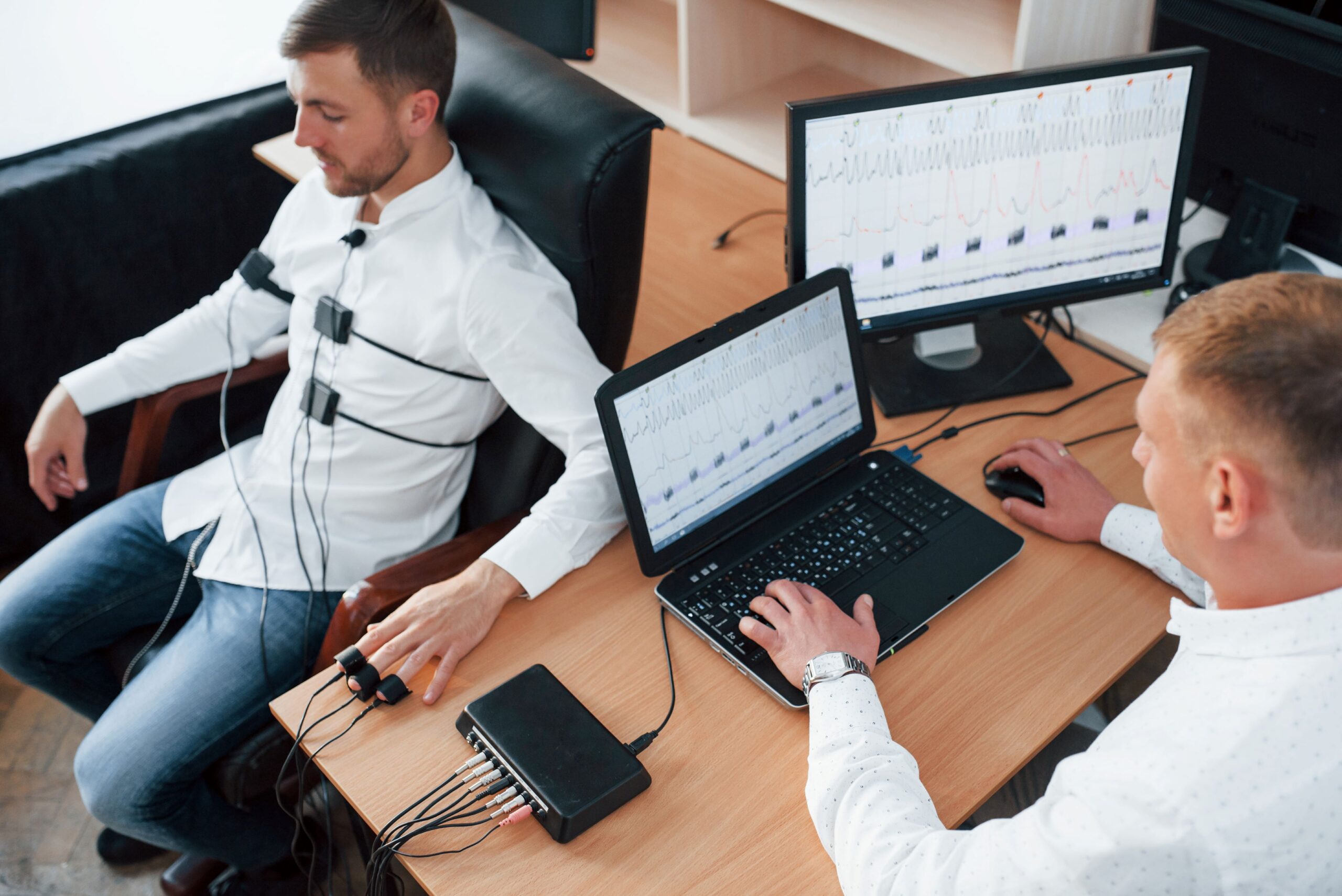
The examiner will attach sensors to your body that measure physiological responses such as heart rate, blood pressure, respiration, and skin conductivity.
-
Questioning:
You will be asked a series of questions designed to assess your truthfulness. These questions typically include relevant questions (RQs), control questions (CQs), and irrelevant questions (IQs). Control questions are designed to elicit a physiological response that can be compared against responses to relevant questions.
-
Data Collection:
Throughout this phase, your physiological responses are recorded as you answer each question. The examiner may ask each question multiple times to ensure accurate readings.
The in-test phase usually lasts between 30 minutes and three hours, depending on various factors.
Data Collection
During data collection, your physiological responses are monitored closely through sensors attached to your body:
-
Blood Pressure and Heart Rate:
Measured using a cuff placed around your arm.
-
Respiration:
Monitored through pneumographs wrapped around your chest.
-
Skin Conductivity:
Assessed via electrodes attached to your fingertips.
These measurements help create a physiological profile that can indicate stress or deception when answering specific questions.
Post-Test Analysis
After completing the in-test phase, you will enter the post-test analysis stage:
-
Review of Data:
The examiner will analyze the collected data for abnormalities in physiological responses.
-
Interpretation of Results:
Based on these readings, conclusions are drawn regarding your truthfulness in response to the relevant questions.
-
Feedback Session:
In some cases, you may receive immediate feedback about your performance during the test.
It’s important to remember that while examiners interpret data based on established protocols, no polygraph test is infallible.

Preparing for Your Polygraph Test
Preparation can significantly impact your experience during a polygraph examination. Here are some essential tips:
1. Understand Your Rights:
Familiarize yourself with your rights regarding polygraph testing and ensure that you consent to take the test voluntarily.
2. Be Honest:
Answer all questions truthfully during both pre-test and in-test phases; dishonesty can lead to complications.
3. Stay Calm:
Practice relaxation techniques before your appointment to help manage anxiety.
4. Avoid Stimulants:
Refrain from consuming caffeine or other stimulants before your test, as they can affect physiological responses.
5. Get Adequate Rest:
Ensure you are well-rested before taking the test; fatigue can influence your performance.
Factors Influencing Polygraph Test Outcome
Several factors can influence how well you perform during a polygraph test:
-
Anxiety Levels:
High anxiety can lead to physiological changes that may be misinterpreted as deception.
-
Medical Conditions:
Certain medical issues or medications may affect heart rate or blood pressure readings.
-
Examiner Experience:
The skill and experience level of the examiner play a significant role in interpreting results accurately.

Conclusion:
Understanding what to expect during a polygraph test can help alleviate anxiety and prepare you for this unique experience. By familiarizing yourself with each phase of the process—from pre-test interviews through post-test analysis—you’ll approach your examination with greater confidence and clarity.
Remember that honesty is crucial throughout this process; being truthful not only helps ensure accurate results but also fosters trust between you and the examiner. With proper preparation and understanding of how polygraphs work, you can navigate this potentially nerve-wracking experience with ease.